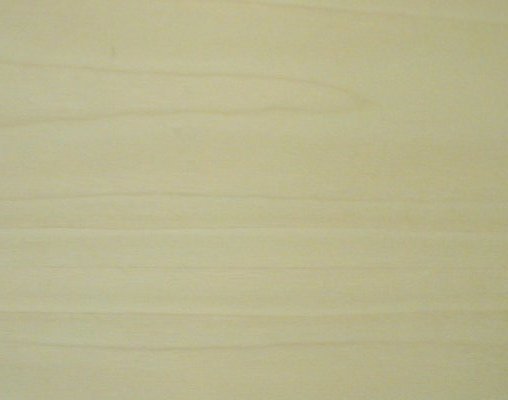
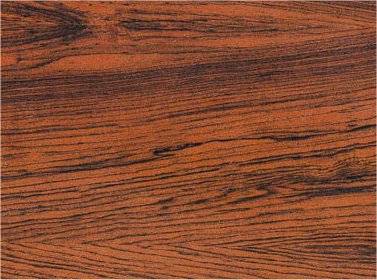
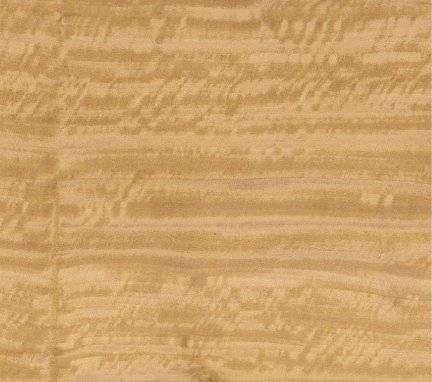
| WOODS AND SAMPLES |
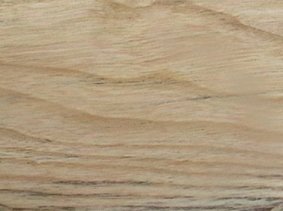
| Alder, European (NOT Red) |
Hardwood |
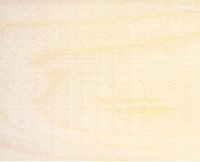
Heartwood and sapwood range in colour from pale pinkish-brown to almost white with no outstanding figure. European Alder is soft, fairly straight-grained with an even texture |

|
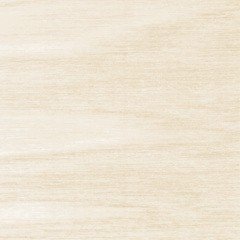
| Ash, European |
Hardwood |
Heartwood is grayish-brown sometimes with a red tinge, sapwood is pale yellow to white which turns a rich honey color with age. European Ash is generally straight grained and coarse but has a smooth texture and open grain pattern that takes a stain evenly and finishes smoothly |

|
Aspen, European
Aspen, Finnish
Aspen, French
Aspen, Swedish |
Hardwood |
Heartwood and sapwood are usually creamy-white to grey but may be light brown to pinkish-brown and are seldom differentiable. European Aspen is typically straight grained |

|
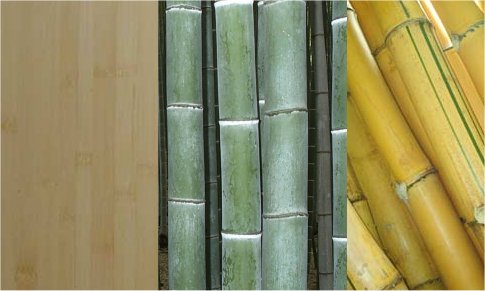
| Bamboo |
Not a wood but classified as a grass |
Bamboo is hollow inside with a circular outer wall. The thin outside layer is green and smooth with a thicker inside yellow layer that is loose and fragile and grows in China |

|
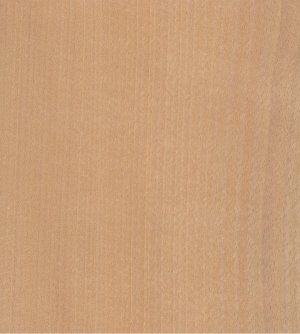
Beech, European
Beech, Carpathian
Beech, Danish
Beech, English
Others according to country of origin |
Hardwood |
Heartwood is a pale cream to pinkish brown that darkens to a pale reddish-brown, sapwood ranges from ivory beige to nearly white. European Beech is generally straight-grained with broad rays and a fine, even texture that takes kindly to intricate carving as well as pulls stains deep into itself and holds finishes like no other wood can |

|
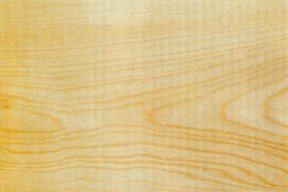
Birch, European
Birch, Silver
Birch, Warty |
Hardwood |
Heartwood is light brown to red-brown, sapwood is a pale white to light yellow with no demarcation. European Birch is straight-grained and has a fine texture |

|
| Bocote** |
Hardwood |
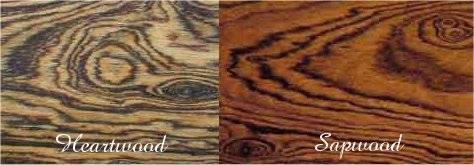
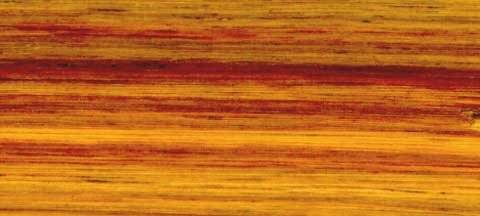
Heartwood is dull golden brown with variegated irregular markings and an attractive ray flexed figure on quarter sawn quarters, sapwood has spectacular background colours of dark brown to red with multi-coloured strips that vary from yellow to orange to green to dark brown. Bocote typically has a straight grain but may vary from straight to roey with a fine to medium texture that has a somewhat oily or waxy appearance and grows in Mexico, Central America, Cuba, Dominican Republic, Haiti and Jamaica |

|
Boxwood, European
Boxwood, Abassian
Boxwood, Circassian
Boxwood, Persian
Boxwood, Turkey |
Hardwood |
Heartwood and sapwood have a uniform colour ranging from cream to pale yellow to amber yellow. European Boxwood has a straight to very irregular grain with a very fine, uniform texture |

|
Bubinga**
Rosewood, African** |
Hardwood |
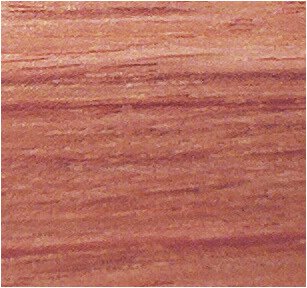
Heartwood is pink, vivid red or red brown with purple streaks or veins that turn a burgundy red when fully aged, sapwood is clearly demarcated and ranges from whitish to rose-coloured with darker purple striping that cures to a yellow or medium brown with a reddish tint while the veining fades. Bubinga can have a straight, interlocked or irregular grain and grows in Africa |

|
Butternut
Walnut, White |
Hardwood |
Heartwood is light brown with occasional darker streaks, sapwood is nearly white. Butternut is straight-grained with a coarse texture that becomes velvety smooth with a satiny luster when sanded and grows in North America |

|
| Canarywood** |
Hardwood |
Heartwood and sapwood are yellow with a variety of streaks in reds, gold and brown and will age to a deep golden yellow tone. Canarywood is straight-grained with a medium to coarse texture and grows in Central America |

|
Cedar, Red
Cedar, Spanish |
Softwood |
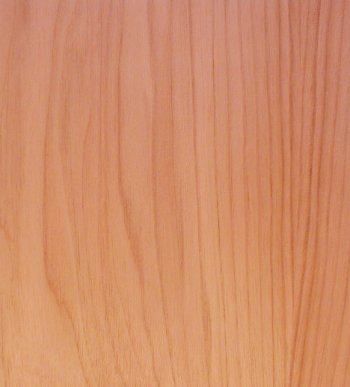
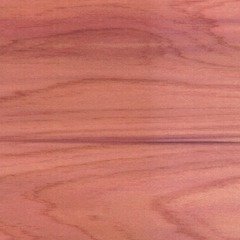
Heartwood is pinkish to red which darkens with exposure to red-brown or red-purple but fades to silver-grey after long exposure to weathering, sapwood is pink or white. Red Cedar is aromatic and not a true cedar but a deciduous tree and grows throughout Europe and North America |

|
Cedar, True
Cedar, Atlantic
Cedar, Atlas
Cedar, Deodar
Cedar of Lebanon |
Softwood |
Heartwood ranges from light brown to deep rich reddish, sapwood is pale coloured. True Cedar is generally straight-grained with a fine texture, although Atlantic and Lebanon cedars are often knotty, and grows in Northern Africa, the Middle East and India |

|
| Cedar, White |
Softwood |
Heartwood is light brown with a reddish or pinkish tinge that turns a mellow, almost metallic silver, sapwood is a whitish colour. White Cedar is generally straight-grained, fine textured, highly aromatic and grows in North America |

|
Cedar, Yellow
Cedar, Alaska |
Softwood |
Heartwood and sapwood are a uniform pale yellow to sulfur-yellow colour with no distinctive pattern. Yellow Cedar is aromatic and not a true cedar but a deciduous tree and grows in North America |

|
| Cherry, European |
Hardwood |
Heartwood varies from light to dark reddish-brown that will change to a rich deep golden brown with age, sapwood is nearly white. European Cherry has a fine, straight, close grain with a smooth, uniform texture with a rich luster |

|
| Chestnut, European |
Hardwood |
Heartwood is yellowish-brown to pale brown, sapwood is ivory white and sometimes marked with light grey streaks. European Chestnut has a straight sometimes flamed or swirling grain with a coarse texture |

|
| Cocobolo** |
Hardwood |
Heartwood is variable hued, maturing to a deep orange-red with darker stripes and mottling, sapwood is whitish. Cocobolo has a fairly straight to interwoven grain with a medium to fine texture, a low luster and grows along the Pacific seaboard of Mexico and Central America |

|
| Cypress, East African |
Softwood |
Heartwood is orange to pinkish brown, sapwood is pale with a wide range of cream, straw and honey brown tones that are filled with darker character knots. East African Cypress is straight-grained with a fine, even texture |

|
Degame
Lancewood
Lemonwood |
Hardwood |
Heartwood is variegated dark brown, sapwood is white to brownish white in colour. Degame is generally straight-grained with the occasional irregular marking, a very fine texture, low luster and grows in Cuba, Central America and South America |

|
| Ebony, Gaboon** |
Hardwood |
Heartwood is uniformly black, sapwood is yellowish-white. Gaboon Ebony has an indistinct grain, a fine even texture, a metallic luster and grows in Africa |

|
| Ebony, Macassar** |
Hardwood |
Heartwood color varies from medium brown to jet black interspersed with contrasting bands of yellow to golden brown, sapwood is light grey. Macassar Ebony has a straight to irregular grain, a fine, even texture, a metallic luster and grows in Sri Lanka and Southern India |

|
Elm, European
Elm, Dutch
Elm, English
Elm, Finnish
Elm, French
Elm, Wych |
Hardwood |
Heartwood is a dull pale red-brown, sapwood is pale lime green to subtle purples and reds. European Elm is usually straight-grained but can be interlocked |

|
Freijo
Teak, Brazilian
Walnut, South American |
Hardwood |
Heartwood is golden brown maturing to a dark brown with lighter coloured rays when quarter sawn, sapwood is lighter coloured and not well demarcated. Freijo is generally straight-grained with a uniform, course texture, a rich, golden luster and grows in South America |

|
| Hemlock, Eastern |
Softwood |
Heartwood is buff to light brown that is indistinguishable from sapwood. Eastern Hemlock has an uneven, frequently spiral grain that has a medium to coarse texture and grows in North America |

|
| Hemlock, Western |
Softwood |
Heartwood is not distinct but the last few rings near the bark are almost white, sapwood is whitish to light yellowish brown with the late-wood portion of the ring frequently displaying a roseate, purple or red-brown tinge. Western Hemlock is straight and even grained with a fine to medium texture and grows in North America |

|
| Hickory |
Hardwood |
Heartwood is pale to red-brown, sapwood is whitish. Hickory is generally straight-grained but can be irregular or wavy with a coarse texture and grows in North America |

|
| Holly |
Hardwood |
Heartwood and sapwood are both chalky white to light grey. Holly has almost no figure from grain pattern or colour with a fine and uniform and grows in Europe and North America |

|
Hornbeam, European
Beech, Blue
Beech, Water
Ironwood
Musclewood |
Hardwood |
Heartwood and sapwood are silver white to cream white marked with grey streaks. European Hornbeam is usually irregular or cross-grained with a fine, even texture |

|
| Ivory, Pink** |
Hardwood |
Heartwood varies from light to dark pink and red with lighter shades of cream and mellows to a deep red-maroon with age, sapwood is light cream to off-white. Pink Ivory is one of the rarest woods in the world, has a very fine texture, takes a beautiful polish and grows in Africa |

|
Jarrah**
Eucalyptus** |
Hardwood |
Heartwood is rich dark reddish brown often with gum veins and boat-shaped flecks and can be found in hues from pink to dark brown, sapwood is a paler reddish brown. Jarrah is typically straight-grained but often interlocked and wavy with a moderately coarse, even texture and grows in Southwestern Australia |

|
| Jelutong** |
Hardwood |
Heartwood and sapwood are creamy-white that mature to a pale straw-yellow. Jelutong is straight-grained with a fine, even texture and grows in Malaysia, Borneo and Sumatra |

|
Kingwood**
Violet Wood** |
Hardwood |
Heartwood is a rich, violet-brown that can shade to almost black with streaks of black, violet-black, brown and golden yellow lines of varying darkness, sapwood is cream-coloured. Kingwood is straight to roey grained with a fine, uniform texture that polishes to a high luster and grows in Brazil |

|
| Koa** |
Hardwood |
Heartwood ranges from red to chocolate browns with deep reddish brown being the most common, sapwood is pale, sometimes even a bleached white. Koa is fine-grained with well defined curly and flamed patterns with a medium coarse texture that takes an exceptionally rich, deeply reflective glow when finished with oils and grows in Hawaii |

|
Korina, Black**
Dark Afara**
Dark Limba** |
Hardwood |
Heartwood and sapwood are not distinct from one another and are a very handsome olive colour with black streaking. Black Korina is straight-grained to irregular or interlocked with a moderately coarse texture that is slightly lustrous and grows in Africa |

|
Korina, White**
Light Afara**
Light Limba** |
Hardwood |
Heartwood and sapwood are not distinct from one another and are light yellow to green colour. White Korina is straight-grained to irregular or interlocked with moderately coarse texture that has a naturally waxy feel to it and grows in Africa |

|
| Larch, European |
Softwood |
Heartwood is pale to rich red, sapwood is light coloured and is generally pale yellow to orange. European Larch is straight-grained but sometimes spiraled with a fine, uniform texture with well defined growth rings |

|
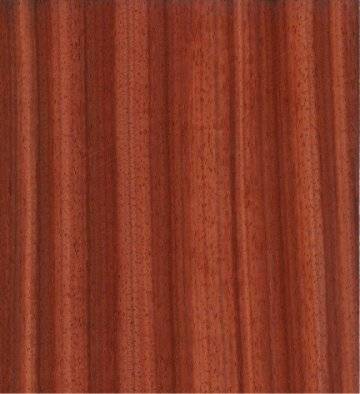
| Mahogany, African** |
Hardwood |
Heartwood is red-brown to deep red often with a purple cast, sapwood is creamy-white. African Mahogany has a straight or interlocking grain often with a ribbon figure and a moderately coarse texture |

|
| Mahogany, Brazilian** |
Hardwood |
Heartwood is pale pink to dark reddish brown, sapwood is yellowish-white. Brazilian Mahogany is generally straight-grained but sometimes roey, wavy or curly with a fine to coarse, uniform texture and grows from Southern Mexico to Brazil |

|
Maple, Hard
Maple, Rock
Maple, Sugar |
Hardwood |
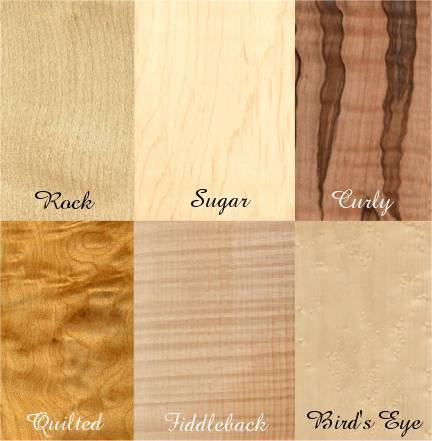
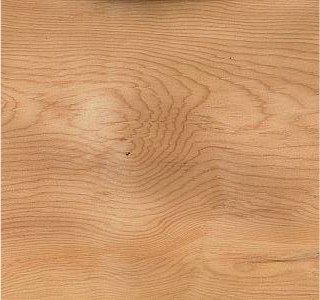
Heartwood is a light reddish brown, sapwood is most desirable and a creamy white. Hard Maple is straight-grained with a fine texture. Special forms of Hard Maple include the Curly Maple, Quilted Maple, Fiddleback Maple, Bird's Eye Maple and grows in North America |

|
Maple, Soft
Maple, Red
Maple, Silver |
Hardwood |
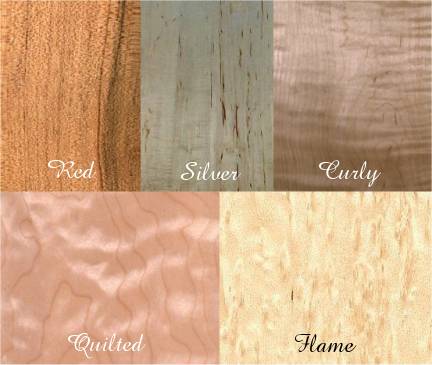
Heartwood is light reddish brown, sapwood is light creamy brown commonly with a grayish cast or streaks. Soft Maple is straight-grained with a fine texture. Special forms of Soft Maple include the Curly Maple, Quilted Maple, Flame Maple and grows in North America |

|
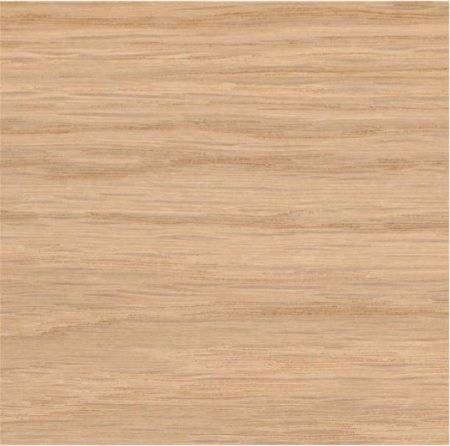
| Oak, European |
Hardwood |
Heartwood is pale brown to dark tan, sapwood has a similar color but tends to be lighter. European Oak is straight-grained with a coarse texture characterized by open pores |

|
| Oak, Red |
Hardwood |
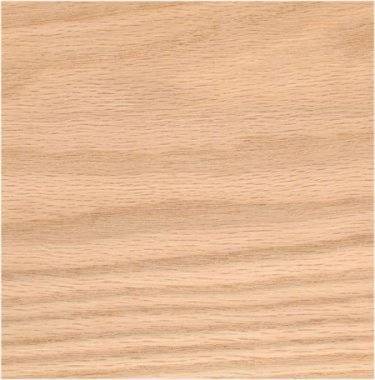
Heartwood is light tan to pink with a reddish tinge, sapwood is almost white. Red Oak is straight-grained with a coarse texture, prominent rays and grows in Europe and North America |

|
| Oak, White |
Hardwood |
Heartwood is light tan, sapwood is nearly white. White Oak is straight-grained with a medium coarse texture and grows in North America |

|
| Padauk, African** |
Hardwood |
Heartwood is vibrant orange to red that darkens to a dark red, almost black colour when fully aged, sapwood is pale beige. African Padauk has a straight to interlocked grain with a moderately coarse texture with large pores |

|
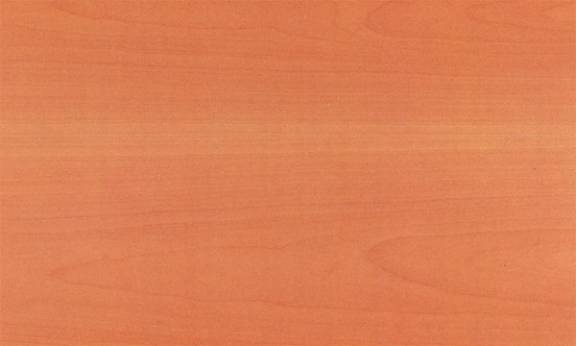
| Pear |
Hardwood |
Heartwood is pinkish brown, sapwood has little delineation. Pear wood is typically straight-grained with a tight, uniform texture and grows in Europe, North America and parts of Western and Southeast Asia |

|
Pine, Eastern White
Pine, Kauri
Pine, Parana
Pine, Ponderosa
Pine, Southern Yellow
Pine, Sugar
Pine, Western White |
Softwood |
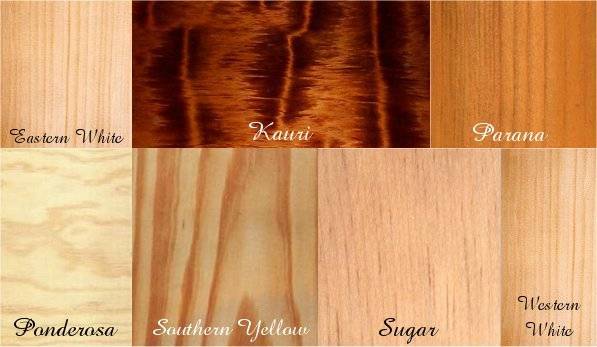
Eastern White: Creamy white, pale yellow or light brown heartwood, creamy white sapwood that yellows with age and is straight-grained with a fine, uniform texture
Kauri: Pale to dark red heartwood that is straight-grained with a fine, silky texture
Parana: Very attractive honey colour with very subdued growth rings with a dense, straight grain
Ponderosa: Light reddish brown heartwood with prominent dark resin duct lines and numerous small but sound knots, nearly white to pale yellow sapwood and is straight-grained, sometimes with a bird's eye patter and has a medium coarse texture
Southern Yellow: Reddish brown, orange or yellow heartwood, yellowish white sapwood with a generally straight-grain with a medium texture
Sugar: Light brown to pale reddish heartwood with very distinctive dark brown resin canals and creamy-white sapwood with a straight, even grain and a relatively coarse texture
Western White: Cream to light reddish brown heartwood that darkens with exposure and a yellowish-white sapwood with a straight, even grain and a medium coarse texture |

|
| Poplar |
Hardwood |
Heartwood is pale olive-green to brown with coloured streaks, sapwood is creamy-white to pale brown. Poplar wood is fairly soft, straight-grained and woolly with a fine, even texture and grows in Europe, North America and Asia |

|
Purpleheart**
Amaranth** |
Hardwood |
Heartwood is a strikingly deep purple when freshly cut and exposed to the air, sapwood is creamy white. Purpleheart wood is usually straight-grained, sometimes interlocked, with a uniform, fine to medium texture and grows in Central American and South America |

|
Redwood, European
Pine, Scandinavian
Pine, Scots
Red Deal |
Softwood |
Heartwood is yellow-brown to red-brown, sapwood is white-yellow with a light red tint and grows from Spain to the Arctic Circle |

|
Rosewood, Brazilian**
Rosewood, Rio**
Jacaranda** |
Hardwood |
Heartwood is variegated brown to violet with irregular black streak, sapwood is cream-coloured and well demarcated. Brazilian Rosewood is straight-grained with a coarse texture, large open pores, an oily, gritty feel, smells of roses and grows in Brazil |

|
| Rosewood, Indian** |
Hardwood |
Heartwood can range from deep reds to chocolate browns with dramatic black veins intertwined over the surface, sapwood is yellowish-white often with a purple tinge. Indian Rosewood has a straight grain, medium texture, smells of roses and grows in Southern India |

|
| Sandalwood |
Hardwood |
Heartwood is a beautiful pale yellow to golden yellow, sapwood isn't usually used. Sandalwood has an interlocked grain that is often wavy or roey producing a narrow ribbon figure with a fine, very even texture, a satiny luster, a rich, pleasant, musky fragrance and grows in Southern Asia |

|
| Satinwood, Ceylon** |
Hardwood |
Heartwood is a warm yellow or dark-brown, sapwood is very pale in colour. Ceylon Satinwood has a very dense grain that takes a high polish and grows in Sri Lanka and West Indies |

|
Spruce, European
Spruce, Norway |
Softwood |
Heartwood and sapwood are uniformly white to pale yellowish-brown. European Spruce has a grain pattern that becomes pronounced when stained and has a fine texture |

|
| Sycamore |
Hardwood |
Heartwood is light to dark reddish brown, sapwood is white to light yellow. Sycamore has an interlocked, irregular grain with a fine, even texture and grows in North America |

|
| Sycamore, European |
Hardwood |
Heartwood and sapwood are white to yellowish-white with a reddish tinge with fine brown growth rings for an attractive figure on plain sawn surfaces. European Sycamore is straight-grained, sometimes curly or wavy with a fine, even texture and is really a maple, not a sycamore |

|
| Teak** |
Hardwood |
Heartwood is yellow-brown to dark golden brown, sapwood is grayish or white. Teak wood can be either straight or wavy grained, depending on origin with a coarse, uneven texture with an oily feel and grows in Indonesia, India and Central America |

|
Tulipwood, Brazilian**
Pinkwood** |
Hardwood |
Heartwood is a gorgeous mix of pinkish-yellow with a striped figure in salmon reds, yellow and violet that fades with age. Brazilian Tulipwood typically has an interlocked, irregular grain with a medium to fine texture with a natural luster and most likely gets its name from the tulip-like colours found in the heartwood and grows in tropical South American, most notably Brazil |

|
| Walnut, Black |
Hardwood |
Heartwood is a rich chocolate brown, sapwood is white. Black Walnut is usually straight-grained, but not always, with a rather coarse texture and grows in North America |

|
| Walnut, European |
Hardwood |
Heartwood is rich dark brown to purplish-black, sapwood is grey-brown with darker streaks. European Walnut is usually straight-grained but sometimes wavy or curly with a coarse texture |

|
| Wenge** |
Hardwood |
Heartwood is dark brown almost black, on the quarter sawn surface it has fine pencil-thin, light tan lines interspersed with blackish brown strips that make the surface appear as if it has been stroked by the fine claws of some wild jungle animal and on the tangential surface, the lines show up as undulating streaks, like the waves of water. Wenge is straight-grained with a very coarse texture and grows in Zaire and other small counties of West Africa |

|
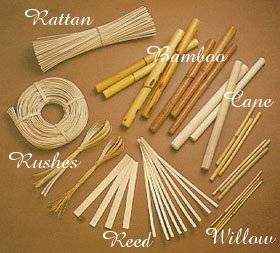
| Wicker |
Not a type of wood but a technique of bending and weaving materials such as cane, rattan, reed, rush and willow |
Cane: The stem of larger rattan trees and is utilized to make natural wicker or for stained pieces
Rattan: An Asian climbing palm tree that is found in tropical rain forests and is the largest source used to create wicker. It grows in the jungles of Southeastern Asia to heights of 100-300 feet but usually is no more then 2 inches in diameter
Reed: A swamp grass that is similar to straw
Rush: Grasslike plant growing in wet places and having cylindrical often hollow stems
Willow: The slender flexible branches or twigs of the willow tree |

|
| Yew, European |
Softwood |
Heartwood ranges from an orange-brown to a golden orange and is often streaked with purple, mauve and brown, sapwood is whitish coloured. European Yew is typically straight-grained, sometimes curly and irregular with an even, medium texture |

|
| Zebrawood** |
Hardwood |
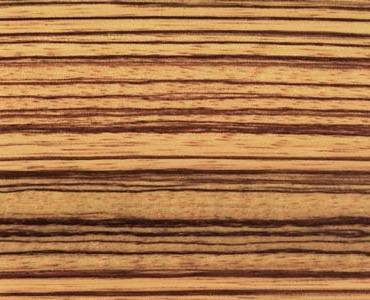
Heartwood is a pale golden yellow or pale brown that features narrow streaks of dark brown to black, sapwood is very distinct and a very pale colour. Zebrawood is straight-grained if quarter sawn but may be interlocked or wavy with a somewhat coarse texture and grows in West Africa |

|